I’ve stumbled across a blog post by Willie Miller Urban Design (WMUD), a Glasgow based ‘creative interdisciplinary consultancy’, which highlights the ‘Hidden Town’ work of Gregor Graf and it’s relationship to the question ‘How do we read a city without signs?’: ‘With a mixture of purist medium format photography and Photoshop, Graf has painstakingly deleted all traces of language and signage from view - as well as people and cars’.
The post is very interesting and I would just go onto repeat all of what they have said, word for word, so I won’t – but below are some eerie images of London from Graf’s work:
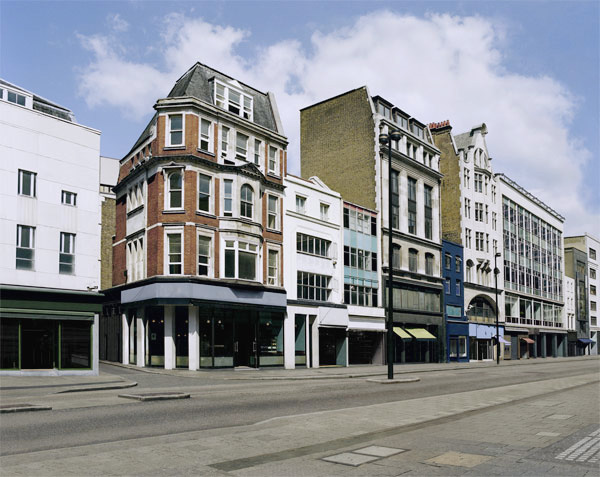
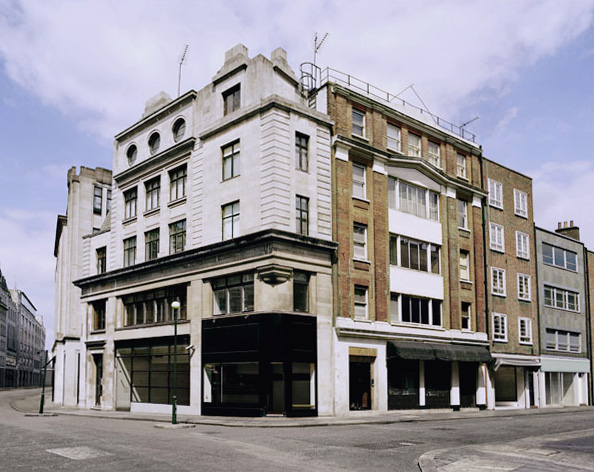
As WMUD highlight the ‘Hidden Towns’ images are a step-on from a radical ban on advertising implemented in São Paulo in 2007, leaving a cityscape vacant of, perhaps surprisingly, not just advertising but regularly used ‘mental nodes’ of navigation:
 This links in quite well with the work of Legible London whom have not only identified the value of mental nodes in navigating around a city but also the confusion and clutter caused by excessive signage (to which advertising arguably adds). Graf's work strips away the deeply coded iconography of the urban domain and creates a blank canvas which is both disorientating but also revealing of the very essence of the shape, fluidity, depth and breath of part of a city. Of ‘Hidden Towns’ and the São Paulo ban, WMUD note:
‘The implication of these unreal and real examples is that in the absence of signs, people need to re-learn what was once recognisable city terrain, marked out urban space, defined focal points and obvious boundaries. One of the São Paulo experiences was that it was initially easy for people to get lost when well known reference points - such as 48-sheet hoardings - were removed. Of course, residents were quick to re-orientate themselves around landmarks, buildings and urban form very much in the way that architects, urbanists and writers on the city would like them to behave’.
Proof, therein, that urban realms are successfully navigated sans signage - but also, reminder of the potential for the unison of effective sign-posting which relates more directly to a conscious urban topography, that can produce places that are identifiable, welcoming and that work. Reason, to encourage not only good signage of the built-environment, but also of the need for ever-more effective and thoughtful urban design.


 Posts
Posts

